


419 King Street West
Oshawa, Ontario L1J 2K5


Who Needs a Visual Field Test?
Noticing a shadow in your side vision can be unsettling. Maybe you miss a step on the stairs. Or a friend seems to appear out of nowhere. These moments are more than just surprises. They can be clues that your peripheral vision is changing.
You are not imagining it. This is exactly why the visual field test exists. It is a simple, painless check that maps what you can see all around you, not just straight ahead. But who really needs one?
The Main Reason: Keeping Watch for Glaucoma
This is the most important reason for the test. Glaucoma can slowly affect your side vision without any early pain or obvious symptoms. You might not notice the small blind spots until they grow.
If you have risk factors, such as being over 60, a family history, or high eye pressure, your eye doctor will likely suggest this test. It is not because something is wrong now. Think of it as a smart, proactive map. It creates a baseline of your vision so your doctor can protect your sight by spotting the tiniest change over time. It is a powerful tool for preservation.
When Changes Might Come From the Brain
Your eyes are direct windows to your brain. Sometimes, vision loss is not about the eyes themselves. It can be related to the brain’s visual pathways.
If you have had a stroke, severe migraines, or are being checked for neurological conditions, this test is key. It helps specialists see very specific patterns. These patterns can tell them where to look in the complex network between your eyes and your brain. In this way, the test assesses your entire nervous system.
For Managing Other Eye Conditions
If you are being treated for a serious retinal condition, like a detachment or a significant vein blockage, your doctor needs the full picture. The visual field test shows them how the condition is affecting your total area of vision. It guides their decisions and helps track your stability over time.
If You’ve Had an Injury
A significant hit to the head or eye can sometimes affect vision in subtle ways. Even if your vision seems okay, a visual field test can reveal areas of weakness. It gives your doctor a clear map of your recovery, ensuring no hidden issues are overlooked.
You and Your Doctor: A Partnership for Clarity
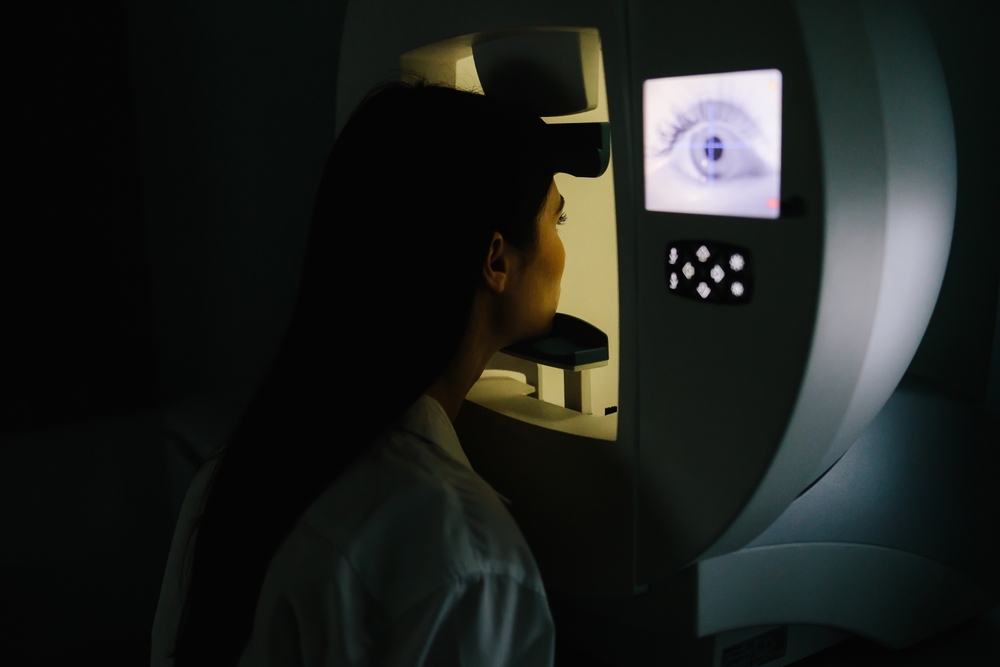
Your doctor will listen and consider your unique history. If they recommend the test, see it as a positive. It means they are committed to a complete understanding of your eye health. The test itself is gentle. You look at a central light and press a button whenever you see a soft flash in your side vision. There is no puff of air or discomfort.
A Map for Your Safety and Confidence
Our peripheral vision is crucial. It keeps us safe, aware, and connected to our environment. A visual field test safeguards this silent, wide-angle view of your world.
If the test is suggested for you, please do not be anxious. See it as a tool for clarity and confidence. By agreeing to it, you are taking the most informed step possible to protect the full, beautiful scope of your sight.
To learn more about the visual field test, visit Oshawa Eye Care. We have offices in Oshawa, Peterborough, and Brampton, Ontario. Call (905) 723-3937, (705) 760-9402, or (647) 348-9926 to schedule an appointment.
https://glaucoma.org/articles/why-do-i-need-a-visual-field-test
https://my.clevelandclinic.org/health/diagnostics/14420-visual-field-test

- Monday10:00AM - 7:00PM
- Tuesday10:00AM - 7:00PM
- Wednesday10:00AM - 7:00PM
- Thursday10:00AM - 7:00PM
- Friday10:00AM - 7:00PM
- Saturday10:00AM - 5:00PM
- Sunday11:00AM - 4:00PM
In the Brampton area? You can visit bramptoneyeclinic.com in Brampton, ON
© 2026 Oshawa Eye Care | All rights Reserved | Accessibility Statement | Privacy Policy | Terms and Conditions
Powered by
